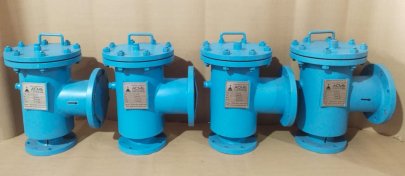
ISO certified unit in India that manufactures of Strainer

ISO certified unit in India that manufactures of Strainer
A magnetic filter is a specialized filtration device designed to remove ferrous (iron-based) and paramagnetic contaminants from liquids, slurries, or gases. It uses high'strength permanent magnets (such as neodymium) to attract and trap metallic particles while allowing clean fluid to pass through.
Magnetic filters are highly effective at removing:
• Iron filings and rust particles
• Welding slag and mill scale
• Fine ferrous debris (down to micron level)
• Weakly magnetic particles (e.g., stainless steel fines in some cases)
Magnetic filters are widely used in:
• Oil & gas pipelines and refineries
• Chemical and petrochemical plants
• Power plants and cooling systems
• Food & beverage processing
• Pharmaceutical manufacturing
• Steel and metal processing industries
• No consumables (no cartridges or bags required)
• Very low operating cost
• Continuous filtration without pressure drop increase
• Effective removal of ultra-fine metallic particles
• Long service life with minimal maintenance
No. Magnetic filters are specifically designed for ferrous and paramagnetic contaminants. For non-metallic particles (sand, dust, polymers), they are typically used in combination with:
• Bag filters
• Cartridge filters
• Strainers
Industrial magnetic filters typically use magnets ranging from 8,000 to 12,000 Gauss, depending on the application and required filtration efficiency.
Cleaning is simple and quick:
1. Remove the magnetic rods or core
2. Wipe or scrape off accumulated particles
3. Reinsert the magnets
Some advanced designs include quick-release or self-cleaning mechanisms for continuous operation.
Magnetic filters generally have very low pressure drop, as there is no dense filter media obstructing flow. Pressure drop mainly depends on:
• Flow rate
• Fluid viscosity
• Internal design geometry
Yes. Industrial magnetic filters are designed to withstand:
• High temperatures (up to 300°C or more with special materials)
• High pressures (ASME-compliant designs available)
Material selection (SS304, SS316, duplex steel) plays a key role.
Common types include:
• Inline magnetic filters
• Magnetic rod filters
• Magnetic separators (liquid/solid applications)
• Self-cleaning magnetic filters
• Magnetic drum separators (for bulk solids)
Key selection parameters:
• Flow rate (m³/hr)
• Line size and pressure rating
• Contamination level and particle size
• Fluid type (liquid, slurry, gas)
• Required magnetic strength
Yes. Hygienic magnetic filters are available with:
• Food-grade materials (SS316L)
• Polished surfaces
• Compliance with FDA and GMP standards
Absolutely. Magnetic filters are often installed upstream to protect:
• Pumps
• Heat exchangers
• Fine filters (bag/cartridge)
This improves overall system efficiency and reduces maintenance costs.
• Periodic cleaning of magnetic elements
• Inspection of seals and housing
• Monitoring for buildup depending on contamination load
Maintenance frequency depends on system conditions.
Industries with high metallic contamination risk:
• Steel and metal processing
• Oil & gas
• Automotive manufacturing
• Power generation
• Chemical processing
Magnetic filters complement rather than replace traditional filters. They are best used as a pre-filtration stage to remove metallic contaminants before fine filtration.