ISO certified unit in India that manufactures of Strainer

ISO certified unit in India that manufactures of Strainer
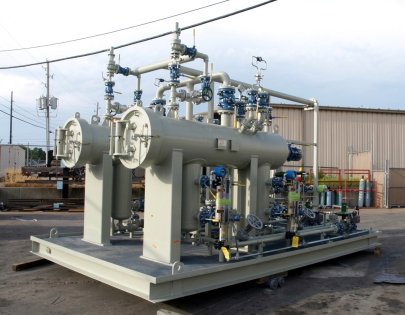
Coalescer Separator Systems remove free and emulsified water down to single-digit ppm levels without heat or vacuum — the purification method specified in aviation fuel handling (per API/EI 1581 coalescer element standards) and adapted here for industrial oil purification.
Engineering & Working Principle
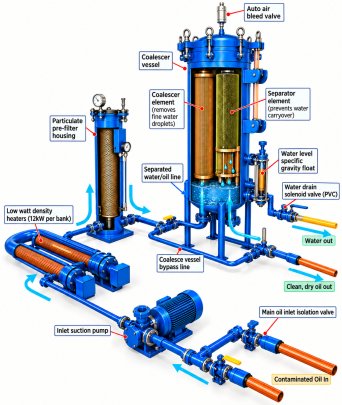
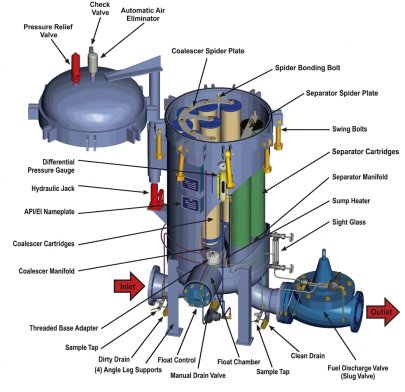
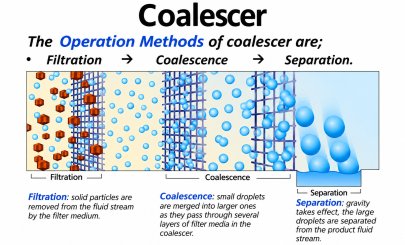
Oil passes through a coalescing element with graduated pore structure that captures micron-sized water droplets and forces them to merge into larger droplets. These droplets then either settle by gravity into a water sump or are rejected by a downstream hydrophobic separator stage, while a final particulate filter polishes the oil to target cleanliness.
Technical Specifications
Standards Compliance
Design principles aligned with API/EI 1581 coalescer element standards (adapted for industrial oil service)
Key Features
Applications
Hydraulic and lubricating oil systems, fuel oil purification, aviation and marine fuel handling, and transformer oil pre-treatment.
Why It Outperforms Standard Systems
Where vacuum dehydration requires energy-intensive heating, our coalescer systems achieve comparable free-water removal at ambient temperature — ideal as a first-stage or standalone solution where energy efficiency and simplicity matter most.
Benefits
A coalescer uses graduated-pore media to merge fine water droplets into larger ones for gravity or hydrophobic separation at ambient temperature — no rotating equipment or heat/vacuum input is required, unlike centrifugal or vacuum dehydration systems.
Coalescer systems typically achieve free/emulsified water levels below 15 ppm, depending on influent contamination and specific application — comparable to aviation-grade fuel/water separation standards.
Yes — since no heating or vacuum pump is required, operating costs are significantly lower for applications where free-water removal (rather than deep degassing) is the primary requirement.
Aviation and marine fuel handling, hydraulic and lubricating oil systems, and transformer oil pre-treatment ahead of vacuum dehydration are the most common applications.
Element life depends on contamination load and water content of the influent oil; differential pressure monitoring across the coalescer stage indicates when replacement is needed to maintain separation efficiency.