ISO certified unit in India that manufactures of Strainer

ISO certified unit in India that manufactures of Strainer
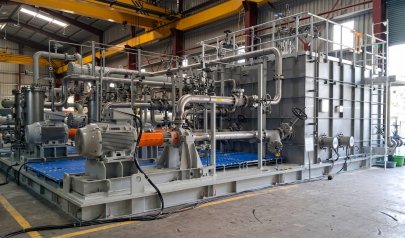
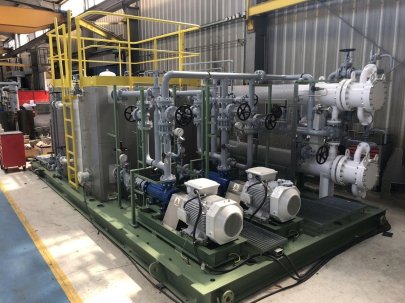
Our Lube Oil Systems (LOS) are engineered to the same design philosophy used by leading turbine and compressor OEMs worldwide delivering continuous, contamination-controlled, temperature-stable oil to critical rotating assets. Designed per API 614 (Lubrication, Shaft-Sealing, and Oil-Control Systems) and API 670 guidelines, these systems form the circulatory backbone of turbines, compressors, and heavy rotating machinery where a single lubrication failure can mean millions in downtime.
Engineering & Working Principle
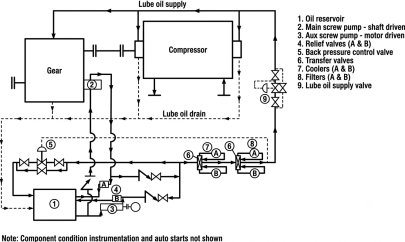
A duty/standby pump arrangement (typically screw, gear, or centrifugal type) draws oil from a reservoir sized per API 614 residence-time guidelines (commonly 5–8 minutes), passes it through duplex filtration (10–25 micron, beta ratio > 200 per ISO 16889), then through shell-and-tube or plate-type coolers to hold discharge temperature at 40–50°C. Pressure-reducing and relief valves regulate supply pressure (typically 1.5–4 bar at bearings), with continuous monitoring via RTDs, pressure transmitters, and flow switches feeding a PLC/DCS system.
Technical Specifications
Standards Compliance
API 614, API 670, ISO 4406, ISO 16889, ATEX/IECEx for hazardous areas (on request)
Key Features
Applications
Steam and gas turbines, centrifugal and reciprocating compressors, large gearboxes, rolling mills, marine main engines, and power generation packages.
Why It Outperforms Standard Systems
Unlike basic circulation loops, our systems are engineered with the same redundancy and instrumentation philosophy used on OEM turbine packages — dual pumps, dual filters, and continuous digital monitoring — so unplanned trips due to lubrication failure become a non-issue.
Benefits
A basic loop simply moves oil. An OEM-grade system is engineered per API 614 with duty/standby pump redundancy, duplex switchable filtration (?200 ? 2), and continuous instrumentation feeding a PLC/DCS — so a single component failure never causes a machine trip.
For most turbines and compressors, ISO 4406 16/14/11 to 18/16/13 is the target range. Servo-controlled or high-precision systems may require tighter codes down to 14/12/9 — we size filtration and Beta ratios specifically to hit your required code.
Standard design uses N+1 pump configuration (one running, one standby) with automatic changeover on pressure-drop detection, plus duplex filters that allow element replacement without interrupting oil flow to bearings.
Yes. Skid-mounted units are factory pre-tested and designed for straightforward tie-in to existing supply/return headers, with minimal outage time required for commissioning
Continuous readings of oil temperature, pressure, flow rate, and differential pressure across filters are logged via PLC/SCADA, enabling condition-based maintenance instead of fixed-interval overhauls — the same approach used by major turbine OEMs.