ISO certified unit in India that manufactures of Strainer

ISO certified unit in India that manufactures of Strainer
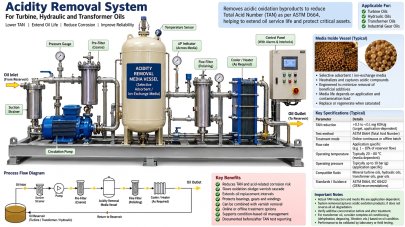
Acidity Removal Systems reduce Total Acid Number (TAN) per ASTM D664 test method, slowing the oxidation cascade that drives sludge formation, corrosion, and additive depletion — critical for extending turbine and transformer oil service life to OEM-recommended intervals.
Engineering & Working Principle
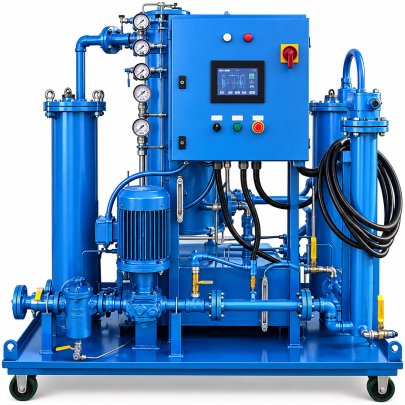
Oil is circulated through selective ion-exchange or adsorbent media engineered to neutralize and capture acidic oxidation byproducts (organic acids) formed during thermal and oxidative stress, progressively lowering TAN while retaining beneficial additives. Often integrated with varnish removal media in a combined purification skid for full oil health restoration.
Technical Specifications
Standards Compliance
ASTM D664 (TAN test method), IEC 60422 acidity guidance for in-service transformer oils
Key Features
Applications
Steam and gas turbines, power transformers, hydraulic systems, and industrial gearboxes experiencing oxidative degradation.
Why It Outperforms Standard Systems
Simply replacing acidic oil is costly and wasteful. Our targeted TAN-reduction media restores oil chemistry in place — verified against ASTM D664 — extending service life the same way major turbine OEMs recommend for in-service oil health management.
Benefits
Total Acid Number (TAN), tested per ASTM D664, measures acidic oxidation byproducts in oil; elevated TAN accelerates corrosion, sludge formation, and additive depletion — reducing TAN slows this degradation cascade.
Typical treatment reduces TAN from above 0.3 mg KOH/g down to below 0.1 mg KOH/g, restoring oil chemistry closer to new-oil condition without full replacement.
It significantly extends oil life and defers replacement, but is not a permanent substitute — it's part of a condition-based oil management program that maximizes service life between changes.
Online continuous slipstream treatment is ideal for critical, continuously-running assets like turbines and transformers; offline batch treatment suits scheduled maintenance windows or smaller reservoir systems.
Before-and-after TAN testing per ASTM D664 provides documented, quantifiable proof of treatment effectiveness for maintenance records and OEM compliance reporting.