ISO certified unit in India that manufactures of Strainer

ISO certified unit in India that manufactures of Strainer
Wayside and onboard Rail Lubrication Systems are deployed by leading metro, freight, and high-speed rail operators globally to control the single biggest driver of rail and wheel wear: flange-rail friction on curves. Engineered per EN 13674 rail-interface guidelines and AREMA best-practice principles, our systems deliver measurable reductions in rail grinding and wheel-turning frequency.
Engineering & Working Principle
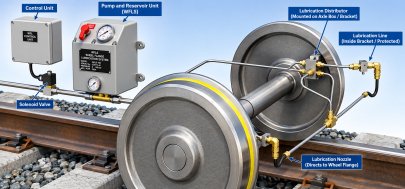
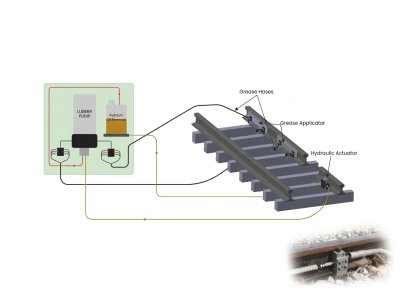
Wheel-flange or wayside sensors detect train presence and speed; a controller triggers a metered spray or grease-bar application of friction modifier or grease onto the rail gauge face or wheel flange at the precise moment of wheel contact. Dosage, timing, and coverage are digitally adjustable and logged for maintenance analytics.
Technical Specifications
Standards Compliance
EN 13674 (rail interface), AREMA guidelines, IP65 environmental rating
Key Features
Applications
Metro and light rail networks, freight and heavy-haul corridors, high-speed rail curves, and mining/industrial rail systems.
Why It Outperforms Standard Systems
Leading metro operators worldwide have documented 30–50% reductions in rail-grinding frequency and wheel-flange wear after deploying precision-triggered lubrication — the same performance class our systems are engineered to deliver.
Benefits
Axle-counters, wheel sensors, or GPS/speed-based triggers detect an approaching train and activate dosing at the precise moment of wheel-rail contact — no lubricant is wasted between passages.
Wayside systems are track-mounted at curves and apply lubricant to the rail gauge face as trains pass; onboard systems are vehicle-mounted and apply lubricant directly to the wheel flange — the choice depends on network layout and maintenance responsibility.
Metro and freight operators using precision-triggered systems have documented 30–50% reductions in rail-grinding frequency and wheel-flange wear versus unlubricated or manually greased curves.
Yes — enclosures are rated IP65 and systems are engineered for -30°C to +60°C operation, with weatherproof, vandal-resistant housings suited to outdoor wayside installation in any climate.
Yes — by reducing lateral (L/V) forces and friction at the wheel-flange interface, the system directly reduces curve'squeal noise, an important benefit for metro and tram operators in noise'sensitive urban areas.