ISO certified unit in India that manufactures of Strainer

ISO certified unit in India that manufactures of Strainer
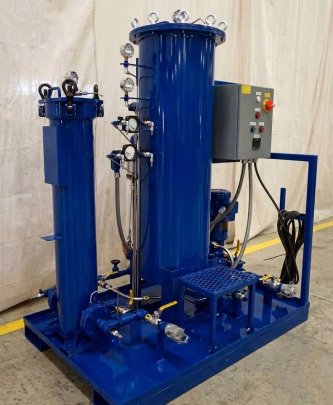
Varnish Removal Systems use Electrophysical Separation Process (EPSP) and ion-exchange resin technology to reduce Membrane Patch Colorimetry (MPC) values below 30 — the varnish-control benchmark specified by leading turbine OEMs (GE, Siemens Energy, Mitsubishi Power) for combustion and steam turbine lubrication systems.
Engineering & Working Principle
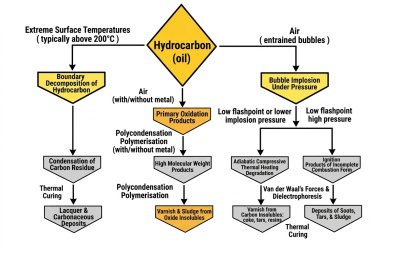
A slipstream of oil is continuously passed through specialized ion-exchange or EPSP media that selectively adsorb varnish precursors - soft, polar oxidation byproducts - without stripping beneficial additive packages. Continuous slipstream treatment (typically 1–5% of system volume per pass) progressively reduces the oil's varnish potential over days to weeks, monitored via periodic MPC testing (ASTM D7843).
Technical Specifications
Standards Compliance
ASTM D7843 (Membrane Patch Colorimetry test method), consistent with major turbine OEM varnish mitigation guidelines
Key Features
Applications
Gas and steam turbines, hydraulic power units, reciprocating and centrifugal compressors, and any high-temperature system prone to varnish/sludge formation.
Why It Outperforms Standard Systems
Basic adsorbent filters remove some varnish but often strip beneficial additives indiscriminately. Our ion-exchange/EPSP media is selective — removing polar varnish precursors while preserving the additive package, verified against ASTM D7843 MPC targets used by major turbine OEMs.
Benefits
Membrane Patch Colorimetry (MPC), tested per ASTM D7843, quantifies varnish potential in oil; a result below 30 is the benchmark used by major turbine OEMs (GE, Siemens Energy, Mitsubishi Power) to indicate healthy, low-varnish oil.
No — our ion-exchange and EPSP media are selective, targeting polar varnish precursors while preserving over 90% of the beneficial additive package, unlike generic adsorbent filters that strip additives indiscriminately.
Continuous slipstream treatment at 1–5% of system volume per pass typically shows measurable MPC improvement within days to a few weeks, with progress verified through periodic ASTM D7843 testing.
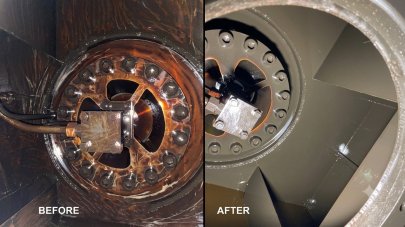
Sticking servo or control valves, reduced heat exchanger efficiency, filter plugging without corresponding particulate contamination, and darkening of oil are common indicators of varnish buildup.
Yes — varnish removal media is frequently combined with acidity (TAN) removal and particulate filtration in a single purification skid for comprehensive oil health restoration.